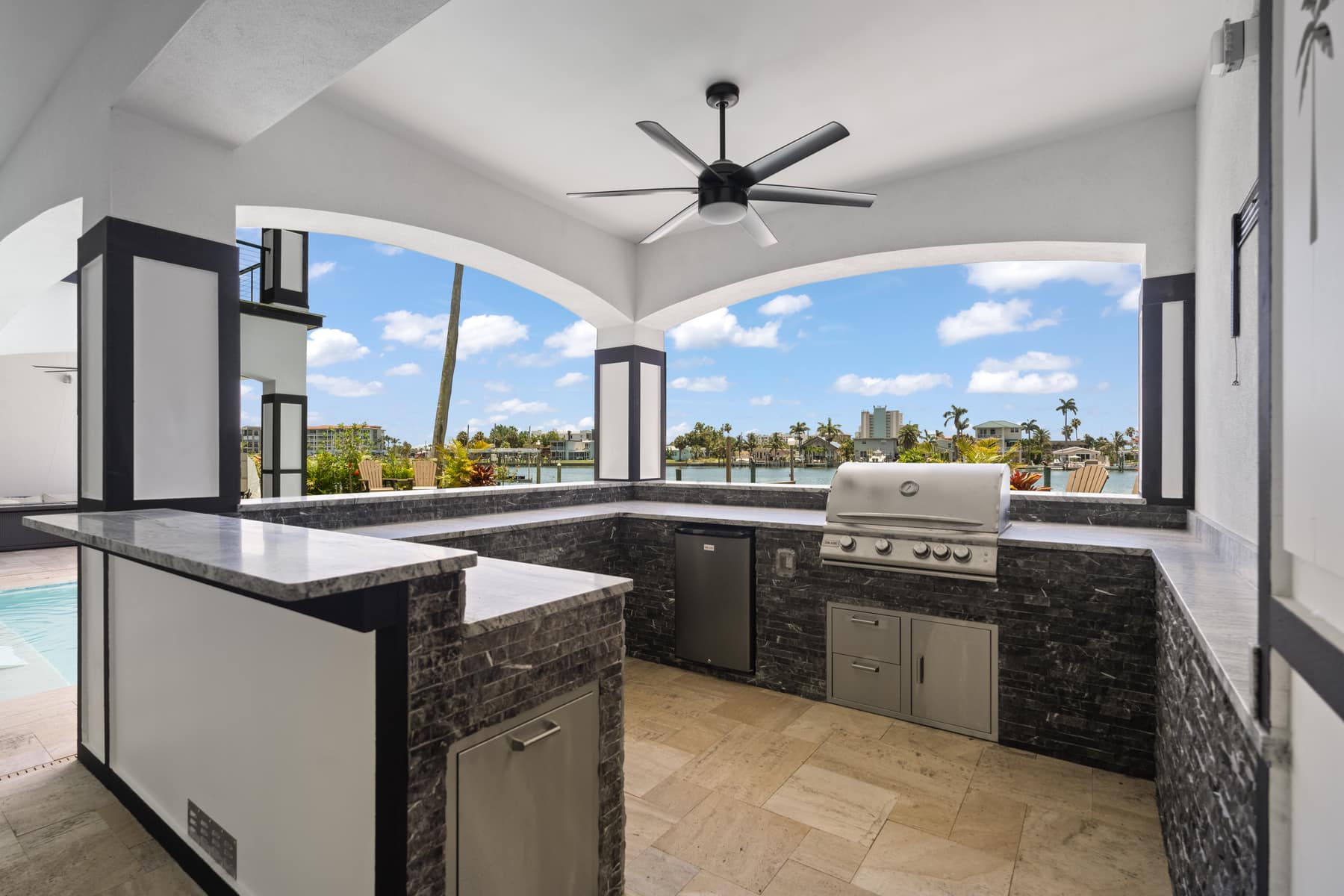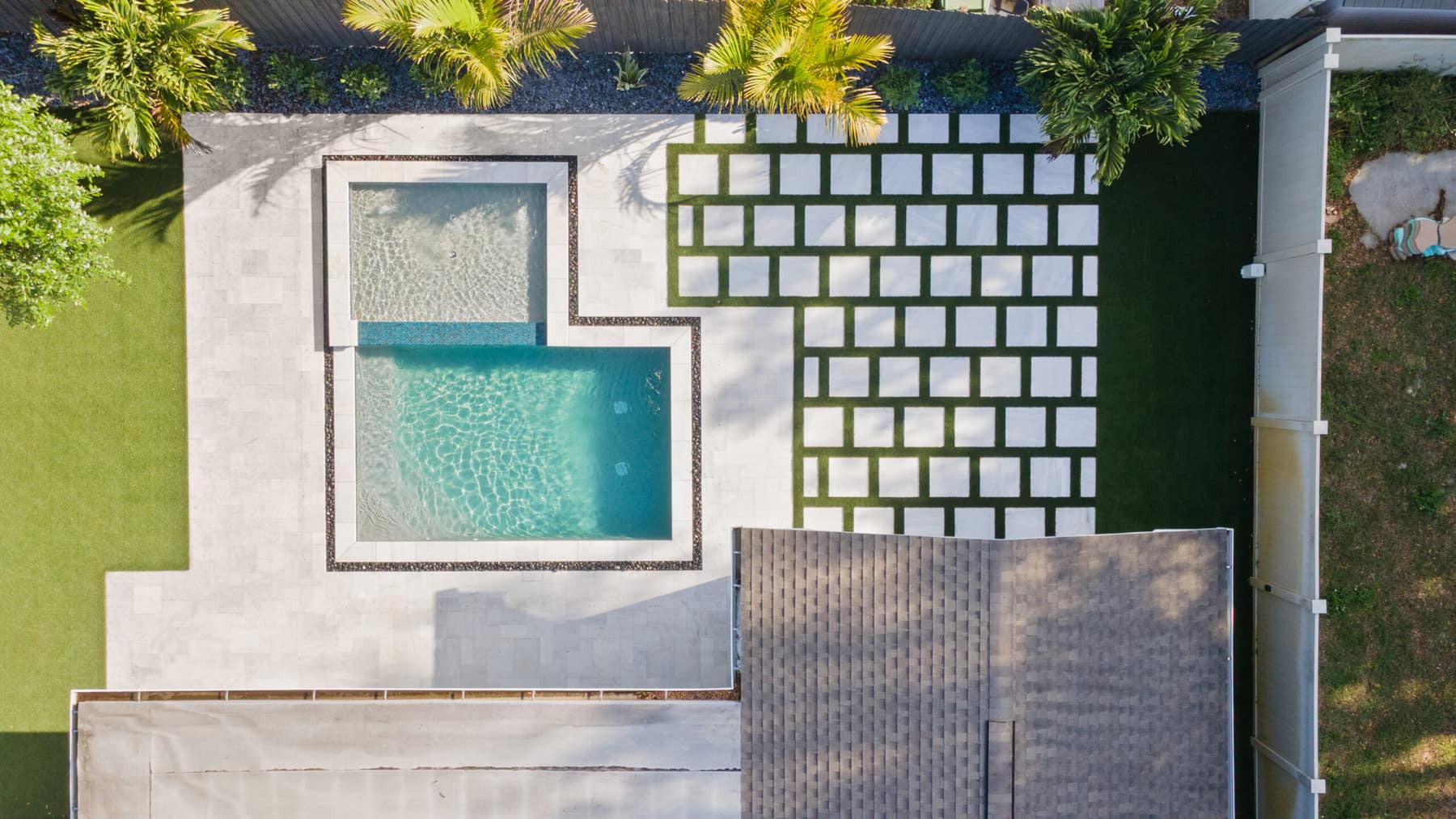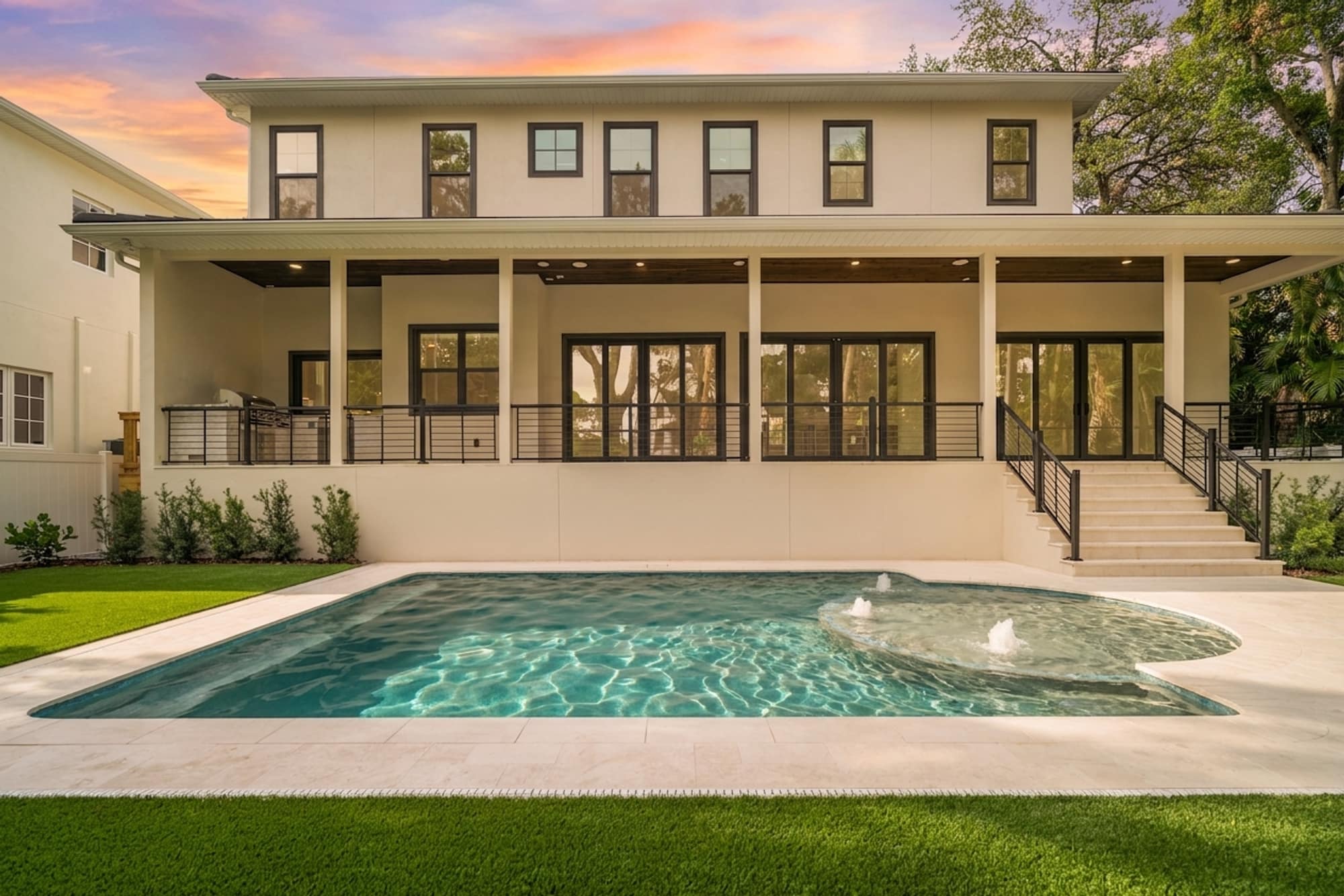
Building a pool on a spec home or a development is a different animal than a homeowner backyard — it lives on the GC’s critical path, gets billed against draws, and has to clear inspection for the CO. Here are the specifics that actually matter, plus our Beat-the-Bid Guarantee: bring us any licensed pool contractor’s written bid and we’ll beat it.
When a homeowner builds a pool, the pool is the project. When a custom home builder or developer builds a pool, it is one trade among dozens — sequenced against the slab, the CO, the buyer’s closing, and the draw schedule that funds the whole job. Get the pool scope wrong and it does not just cost you a backyard; it holds up a certificate of occupancy and a sale. This is the developer’s-eye view of what actually goes into a pool on a Tampa Bay build, and how we price it to win.
It is the companion to our piece on why builders need a pool contractor who specializes in developers. That one makes the case; this one gets into the specifics — sequencing, utilities, permits, draws, and the guarantee that decides most bids.
The pool lives on the GC’s critical path, not its own
A retail pool company schedules around its own convenience. On a home build, that does not work. The pool’s excavation has to land after the house pad and site work but before the deck and final grade; the equipment set and electrical tie-in have to sequence with the home’s rough and finish; and the screen enclosure or fence has to be up before the safety-barrier inspection that gates your CO. A builder-ready partner plots the pool against your construction cadence and reads from the same calendar as your framer, your electrician, and your landscaper.
On a home build, the pool’s permits, inspections, and safety barrier all feed the certificate of occupancy. If the pool slips, the close slips.
Site logistics you are already paying for
On a live job site, the pool crew is sharing your access, your laydown space, and your dirt. The specifics that keep it clean: planning equipment and dirt-haul routes so a gunite rig is not blocking a concrete pour, coordinating spoil removal against your own cut-and-fill, and locating the equipment pad early so it does not collide with the AC, the generator, or the setback. On tight Pinellas infill lots and zero-lot-line homes, access is frequently the single biggest constraint — and it is far cheaper to solve on paper than with a crane later.
Utilities, bonding, and the equipment pad
This is where pools quietly derail a build. The pool needs a dedicated electrical sub-feed and equipment circuits, a gas stub if there is a heater or fire feature, equipotential bonding tied in correctly, and often an autofill line off the home’s plumbing. If those stubs are not roughed in while the walls are open and the slab is accessible, you are cutting finished work later. Because LIV holds pool, electrical, and gas licenses in-house, we coordinate those tie-ins directly with your build instead of waiting on a chain of subs — and nothing sits idle between phases.
One permit set, sequenced with the home’s
- Confirming jurisdiction first — a “Tampa” address may be City of Tampa or unincorporated Hillsborough County, and they permit differently.
- Sequencing the pool’s building, electrical, and gas permits so inspections line up with the home’s, not against them.
- Planning the pool safety barrier — fence, screen enclosure, or approved cover — as a CO item from day one, not an afterthought.
- Handling flood-zone elevation of equipment where FEMA maps require it, common on waterfront and low-lying Tampa Bay lots.
- Managing drainage and impervious-coverage so the added deck does not push the whole site over its limit.
HOA, CDD, and architectural review run in parallel
A huge share of Tampa Bay’s new development sits inside HOA and CDD communities, and their architectural review boards carry their own rules on setbacks, fencing, screen color, and equipment screening — running alongside the county permit, not after it. For a production or spec builder repeating a plan across a community, getting the pool package pre-approved once and repeating it is a real schedule and margin advantage. We build that repeatability into the scope.
Pricing that fits a pro forma — and the Beat-the-Bid Guarantee
Developers do not need a salesperson; they need a number they can drop into a pro forma and trust. Every LIV builder proposal is transparent and itemized, with no surprise change orders, and written so you can hand it to a client or a lender as-is. And we back the number: bring us any current, written bid from a licensed Florida pool contractor on an apples-to-apples scope, and we will beat it.
The Beat-the-Bid Guarantee: give us a licensed pool contractor’s current written bid on a like-for-like scope, and LIV beats the price. Fully licensed, fully warrantied, still lower.
We can stand behind that because of how LIV is built. Every core trade — pool, electrical, gas, and general contracting — is licensed in-house, so there is no stack of subcontractor markups baked into the bid. Add the volume efficiency of running repeatable scopes across 35-plus builders in Pinellas and Hillsborough, and we can hold a lower number without cutting the spec, the license, or the lifetime shell warranty. Beating the bid is not a discount gimmick; it is the math of a leaner operation.
A cheaper bid from an unlicensed or under-scoped contractor is not a savings — it is a liability on your CO. We beat licensed bids on scope that actually holds up.
Billing that matches your draw schedule
The pool’s payment structure should map to your construction draws, not fight them. LIV bills against defined milestones — dig, steel and plumbing, gunite, deck and tile, equipment set, and finish — so the pool’s costs land where the funding does. For a developer carrying a spec home, cash-flow that mirrors the build is as valuable as the price itself.
Warranty and a clean handoff to the buyer
The pool outlives the closing, and so does your name on the home. LIV hands every finished pool off with a lifetime structural shell warranty, warrantied equipment, and a buyer walkthrough of the automation and care — so the homeowner’s first call is to us, not to you, and the pool reflects the quality of the home it sits behind.
The takeaway for Tampa builders
Building a pool for a developer is a coordination problem before it is a construction problem: sequence it into the critical path, rough in the utilities while the walls are open, permit it alongside the home, price it to fit the pro forma, and bill it against the draws. Do all of that and the pool stops being the line item that threatens the close and becomes the feature that sells the home. That is exactly how LIV was built to work — from the builder’s side of the schedule.
Building in Tampa Bay and want a pool partner who respects the timeline, the standard, and the budget? Send us your plans and your current bid — our builder program is where it starts.
Common questions.
Yes. Bring us a current, written bid from a licensed Florida pool contractor on an apples-to-apples scope, and LIV will beat the price. We can do it because every core trade — pool, electrical, gas, and general — is licensed in-house, so there are no stacked subcontractor markups, and our builder volume across Pinellas and Hillsborough keeps costs lean without cutting spec or warranty.
We plot the pool against the GC’s critical path — excavation after the pad and site work, utility stubs while the walls are open, equipment set with the home’s finish, and the safety barrier before the CO inspection. Milestone scheduling and in-house trades keep the pool off your critical path.
Yes. LIV runs structured builder pricing with transparent, itemized proposals and repeatable scopes for spec homes and production communities, billed against your draw schedule. Our builder program covers how we partner with GCs and developers across Tampa Bay.
LIV does. Every pool is handed off with a lifetime structural shell warranty, warrantied equipment, and a buyer walkthrough — so the homeowner’s service calls come to us, not to the builder.